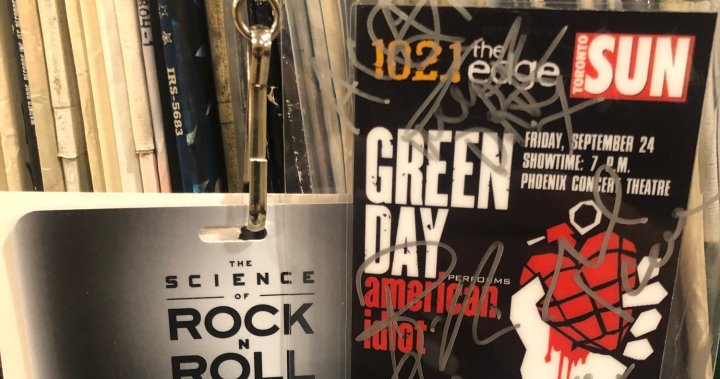
A beginner’s guide to backstage passes
Global News
As the live music industry attempts to recover from the pandemic, I've once again started to get questions about backstage passes to shows. Here's what you need to know.
The short answer is always the same: “You can’t. Besides, what did you think you’d find backstage, anyway? Caligula-strength orgies with groupies? Wild parties catered with all manner of booze and food? Tables heaped with cocaine? Or were you just thinking of hanging with the band in their dressing room before they go to work?”
Let me set you straight: Most of what you’ve ever heard or read about what goes on backstage is a complete lie. Yes, things used to be a lot looser in the pre-#MeToo era (read: the 1970s and ’80s, or so I’ve heard). But with today’s concert business, there’s not a lot of time or patience for messing around with people who don’t belong backstage. Schedules are tight, security is strict, and privacy is paramount.
However, since these questions keep coming in, let me give you a bit of schooling, starting with a little history.
Back in the 1950s and ’60s, it was comparatively easy to get backstage. A 10-spot to the security guard, passable business card credentials, or, in the case of women, a pretty face, was enough to breach the barricades. But as the touring business got bigger and more complex, artists, managers, promoters, and venues began to clamp down.
The modern backstage pass was invented by Dave Otto of Cincinnati. As the touring industry exploded, it became necessary to restrict backstage access to working crew, select VIPs, and special guests. The best solution was to tag people with a visible piece of ID.
Otto figured out a way to print graphics on a flexible rectangle of rayon with an adhesive backing. These patches adhered very well to all sorts of clothing. Because they were flexible, they worked well with body contours and once applied, did not fall off. If you tried to peel one off, the glue didn’t work as well the second time around, if at all. Since there’s usually a rule that you have to have your pass permanently affixed to an area that’s clearly visible, sharing is discouraged.
From the time these passes were first introduced in 1973, they became a sort of currency, something even more valuable than a front-row ticket, because they allowed passage to an area where no mere mortals could venture. It was an invitation to untold glories behind the curtain. And yes, things sometimes got very weird/illegal in the old days.
Fast-forward to today. Nowadays, not all backstage passes are the same. In fact, they come in a variety of flavours. This is a basic guide to the most common sort of passes.
