5 things to know for July 10: NATO summit, 2024 race, Beryl aftermath, Immigration, Human plague
CNN
CNN’s 5 Things brings you the news you need to know every morning.
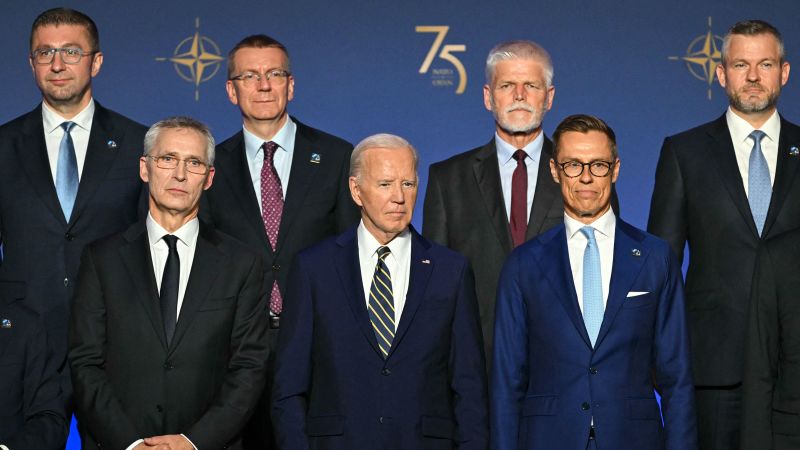
Close calls on airport runways this year have alarmed the flying public and aviation experts alike. This week, a United Airlines plane lost a wheel during takeoff from Los Angeles International Airport while two planes in upstate New York almost used the same runway, spurring an investigation. Here’s what else you need to know to Get Up to Speed and On with Your Day. President Joe Biden is hosting global leaders in Washington, DC, at the annual NATO summit, a gathering designed to show a united front on key issues. Biden on Tuesday announced plans to supply new air defenses to Ukraine in his opening speech — providing much-needed support for the country at a critical juncture in its defense against Russia’s invasion. On the sidelines of the summit, Ukrainian President Volodymyr Zelensky urged international leaders to promptly aid his war-torn country. “Everyone is waiting for November,” including Russian President Vladimir Putin, Zelensky said, as a potential second Donald Trump presidency remains top of mind for the United States’ allies and adversaries. Senate and House Democrats met Tuesday to discuss President Biden’s 2024 campaign amid a chorus of voices calling on him to quit the race. After the House meeting, several Democrats refused to say whether they supported keeping Biden as the nominee, a sign of the lingering divide over his electoral viability. Sen. Michael Bennet became the first Democratic senator to publicly say he doesn’t believe Biden is capable of winning reelection, telling CNN he fears former President Donald Trump could “maybe win it by a landslide.” Meanwhile, Trump is building suspense around who will be his running mate ahead of the Republican National Convention next week. Trump’s search for a running mate has focused on three names: North Dakota Gov. Doug Burgum, Florida Sen. Marco Rubio and Ohio Sen. J.D. Vance. Life-threatening heat is gripping southeast Texas, where nearly 2 million homes and businesses remain without power and air conditioning in the wake of storm Beryl’s deadly and destructive landfall. Beryl tore through the state Monday, flooding coastal communities, shredding homes and ripping down webs of power lines. Phone and internet access has also been cut off in some communities, including Galveston. Prolonged heat is now threatening to pose significant health risks for the elderly, homeless people and children. Cooling centers have opened across the state as temperatures creep into the 90s and heat indices reach 105 degrees in some areas. Voters in eight states will soon decide whether to change their constitutions to explicitly ban voting by noncitizens. The move is part of a multipronged effort by Trump-aligned Republicans to raise the unlikely specter of undocumented immigrants casting ballots in November’s elections. It is already illegal for people who aren’t US citizens to vote in federal contests, and experts say it rarely happens, given that violators face imprisonment and deportation. Separately, a new Massachusetts policy went into effect Tuesday that bans migrants from sleeping at Boston’s Logan International Airport. For months, state officials have warned they were overwhelmed by the number of migrant families arriving and sleeping overnight in the airport’s terminals.


Mike Pence used to dream of following two successful Donald Trump terms with his own turn in the White House.

An Air Canada plane was damaged after colliding with a vehicle on a runway at New York’s LaGuardia Airport Monday, according to video from the scene and air traffic control audio.

A statue of Christopher Columbus has been erected outside of an ornate federal office building on the White House grounds — the latest sign of the Trump administration’s efforts to reshape cultural and historical representations across the nation’s capital.

Kentucky Gov. Andy Beshear, speaking in JD Vance’s home state of Ohio on Saturday, tore into the vice president, questioning his Appalachian roots and telling voters they “deserve better.”

President Donald Trump has said ICE agents will head to US airports tomorrow amid a partial government shutdown. Follow for live updates

Cuba is working to restore the electricity supply after another island-wide blackout left more than 10 million people without power.

President Donald Trump said Sunday border czar Tom Homan will be in charge of deploying Immigration and Customs Enforcement agents to airports on Monday, with Homan telling CNN the agents will help with security at entrances and exits to ease the Transportation Security Administration’s workload.

Donald Trump wants us to believe that a deal with Cuba is close at hand. After this past week, I am not so sure.

President Donald Trump has said ICE agents will head to US airports tomorrow amid a partial government shutdown. Follow for live updates

President Donald Trump said Sunday border czar Tom Homan will be in charge of deploying Immigration and Customs Enforcement agents to airports on Monday, with Homan telling CNN the agents will assist with security at entrances and exits to ease TSA workload amid a partial government shutdown.

Janet Mills and her allies are counting on a gender gap to narrow Platner’s wide lead ahead of the June 9 primary to decide who will face incumbent Republican Sen. Susan Collins. They are betting that the unfiltered style that has brought Platner widespread attention as someone who could help Democrats reach young men will backfire with women.

Why do people “pledge allegiance” to a “state” that is no longer a state? And what spurs someone to not just attack innocent people, but to then make a statement of loyalty while doing so?

A Supreme Court case examining state deadlines for election ballots sent in the mail is just the tip of the spear in President Donald Trump’s war on mail-in voting.