5 things to know for Feb. 11: Artificial intelligence, Hostage release, Package delays, Gulf of America, Guatemala bus crash
CNN
CNN’s 5 Things AM brings you the news you need to know every morning.
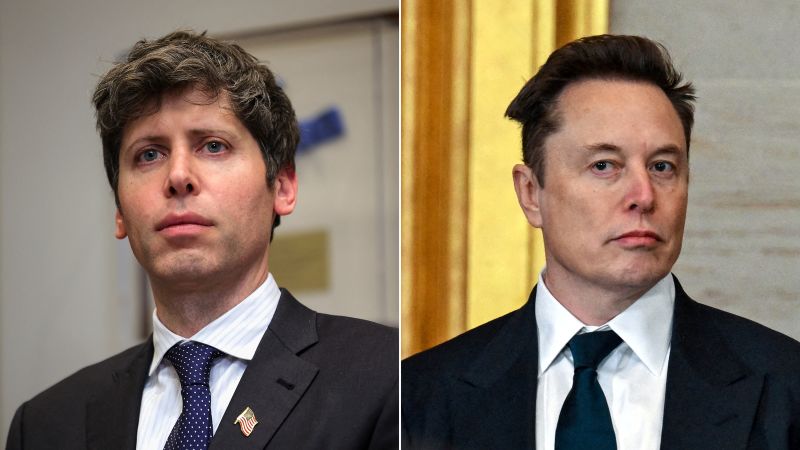
President Donald Trump signed an executive order encouraging the return to plastic drinking straws. It’s a complete shift from the Biden administration’s efforts to rein in single-use plastic waste — and another example of Trump rushing to fulfill his campaign promises. Here’s what else you need to know to Get Up to Speed and On with Your Day. Elon Musk is attempting to put himself at the forefront of artificial intelligence with a high-stakes bid that could reshape the future of the technology. The Tesla and SpaceX founder is leading a group of investors who’ve offered to buy OpenAI, the parent company of ChatGPT, for nearly $100 billion. The investment could give Musk majority control of the company, which rivals his X.AI program. In response to the unsolicited offer, OpenAI CEO Sam Altman said in a post on X, “no thank you but we will buy Twitter for $9.74 billion if you want.” Their back-and-forth comes as political and business leaders are meeting at the Artificial Intelligence Action Summit today in Paris to discuss how to create effective guardrails for AI without stifling innovation. Hamas has postponed the next hostage release scheduled to take place in Gaza on Saturday “until further notice,” accusing Israel of breaking the ceasefire deal. Israel described the postponement as a “complete violation of the ceasefire” and called on the Israeli military to prepare for “any possible scenario” in Gaza. President Trump, meanwhile, urged Israel to cancel the ceasefire and “let all hell break out” unless Hamas releases all remaining hostages by noon Saturday. Trump is also set to meet with King Abdullah of Jordan at the White House today — a week after proposing a new plan to seize control of Gaza and push Jordan and Egypt to accept millions of new Palestinian refugees. The recent tariffs set in motion by the Trump administration could be to blame for delayed packages coming from China on sites like Amazon, Shein and Temu. Last week, Trump levied a new 10% tariff on all goods coming to the US from China. Initially, the tariffs were also applied to packages imported from China worth less than $800 that were previously exempt. But the Trump administration suspended that provision temporarily, throwing the US Postal Service into chaos as it was forced to halt all package deliveries from China and Hong Kong to comply with the order. Experts say some packages have been caught up in the confusion and could still be sitting with customs, where they were set to undergo a more thorough inspection. The body of water formerly known in the US as the Gulf of Mexico is now listed for US-based users of Google Maps as the Gulf of America. “People using Maps in the US will see ‘Gulf of America,’ and people in Mexico will see ‘Gulf of Mexico.’ Everyone else will see both names,” Google said in a statement Monday. The search giant said last month it would also change the name of Mount McKinley, the nation’s highest peak, from Denali, which was a nod to the region’s native population. Both moves stem from an executive action that President Trump signed after taking office, saying the changes “honor American greatness.”


As a shrinking number of Transportation Security Administration agents work to keep hourslong security lines moving despite not being paid, President Donald Trump stepped into the fray Saturday, announcing he will send Immigration and Customs Enforcement officers to airports by Monday if Congress doesn’t agree to a plan to end the partial government shutdown.

Donald Trump wants us to believe that a deal with Cuba is close at hand. After this past week, I am not so sure.

The search for missing 84-year-old Nancy Guthrie, mother of “Today” show host Savannah Guthrie, has stretched into another anguished week, with mounting pressure on investigators and a family grappling with uncertainty.

Cuba’s Ministry of Energy announced Saturday evening that entire island has suffered another electrical blackout, leaving more than 10 million people without power.

Iran’s attempt to strike a US-UK base over 2,000 miles (over 3,000 kilometers) off its coast has renewed questions about Tehran’s military capabilities and how far its missiles can reach.

For years, President Donald Trump has offered crass and insensitive comments about people who died – especially his foes. That reached a new level on Saturday.

Robert Mueller, the former FBI director who led the historic probe into alleged collusion between Donald Trump’s 2016 campaign and the Russian government, has died. He was 81.

Marlon Batres is not OK. The assistant principal says he is in constant fear for his students, staff and even himself after federal agents swarmed the streets.

To hear some prominent MAGA voices tell it, the marathon Senate debate over the “SAVE America Act” is an existential one for the Republican Party. But the urgency to pass the legislation is not felt by Americans more widely.

In the days after winning the Democratic nomination for Senate, Illinois Lt. Gov. Juliana Stratton spoke to the two women with whom she could make history next year.

This month, terrorist suspects in the alleged bomb-throwing in New York City and the synagogue attack in Michigan visited Phantom Fireworks stores shortly beforehand.

In near-daily briefings with top military officials at the White House, President Donald Trump has reviewed options that include sending American troops into Iran.

With his Atlantic City casinos in duress in the 1990s, Donald Trump saw a potential lifeline in sports betting and aggressively campaigned to legalize it in New Jersey. But when state powerbrokers shut him down, Trump vowed that he’d eventually find a way to win.