5 things to know for April 11: Deportations, Helicopter crash, Yemen group chat, Myanmar quake, Joint chiefs
CNN
CNN’s 5 Things brings you the news you need to know every morning
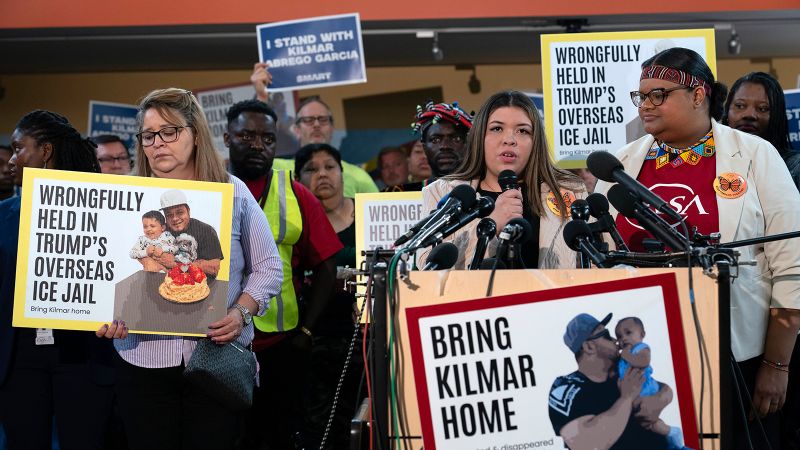
President Donald Trump’s 25% tariffs on all cars shipped to the US are expected to raise car prices by thousands of dollars. If people can’t afford to pay more, will they opt to take the bus or train instead? Doing so could reportedly save Americans more than $13,000 a year — and benefit the environment. Here’s what else you need to know to Get Up to Speed and On with Your Day. The Supreme Court ruled on Thursday that the Trump administration must “facilitate” the return of a Maryland man who was mistakenly deported to El Salvador. However, the court did not say the administration was required to return Kilmar Armando Abrego Garcia to the US nor did it give a deadline for his return. Abrego Garcia was deported on March 15 and is being held in the notorious Cecot mega-prison even though an immigration judge barred his deportation years ago over concerns about his safety in his native country. The Trump administration has conceded in court filings that the sheet metal worker and father of three was deported due to “an administrative error,” but claims it cannot get him back because he’s in Salvadoran custody. A sightseeing helicopter crashed into the Hudson River off the New Jersey shoreline on Thursday afternoon, killing six people — including three children. Agustín Escobar, a Siemens executive from Spain, and his family were just 16 minutes into a sightseeing excursion above Manhattan when the aircraft suddenly dropped from the sky and slammed into the river upside down. The pilot also perished. The cause of the crash is under investigation. A federal judge has ordered the Trump administration to provide more details about how it is preserving the messages regarding US military strikes on Houthi targets in Yemen that were sent in a Signal chat group last month. The top intelligence officials’ conversation inadvertently included Jeffrey Goldberg, the editor-in-chief of The Atlantic, who later published excerpts from the chat. The release of such sensitive information, which several members of the administration have claimed was not classified, underscored the extent of the breach in operational security. Last month, US District Judge James Boasberg ordered the administration to preserve the messages and provide him with updates explaining how it was complying with the request. His latest directive — seeking additional information — was issued after lawyers for an advocacy group claimed the administration’s explanations were not sufficient. Justice Department lawyers now have until Monday to provide those details. The US response to Myanmar’s deadly earthquake has exposed a major void in international relief efforts, experts say. The 7.7-magnitude temblor that struck Myanmar on March 28 killed more than 3,500 people and damaged or destroyed at least 1,300 buildings. The quake occurred amid the Trump administration’s campaign to dismantle USAID, America’s main humanitarian aid agency. Since Trump’s inauguration, thousands of USAID employees have been laid off and 83% of its programs have been cut. The US sent just three staffers to Myanmar to assess the situation; they were still working there when DOGE laid them off last week. Although the Trump administration pledged to send $9 million in aid, with minimal staffing on the ground it’s unclear how that money will be channeled.


Haiti is about to get a new set of foreign boots on the ground. The goal sounds simple: fight the gangs that have brought life to a standstill.

Oklahoma’s governor picks energy executive Alan Armstrong to fill US Senate seat through end of year
Oklahoma’s governor on Tuesday appointed energy executive Alan Armstrong to serve in the US Senate through the end of the year and finish the term of Republican Markwayne Mullin, the new homeland security secretary.

Newly confirmed Homeland Security Secretary Markwayne Mullin told senators during his confirmation hearing that he wanted to keep the department out of the headlines. That won’t be easy.

A trader made nearly $1 million since 2024 from dozens of well-timed Polymarket bets that correctly predicted US and Israeli military actions against Iran, according to an analysis shared with CNN.

Travelers have been dealing with worsening airport wait times as ICE agents deploy to more than a dozen airports. Follow for live news updates.

President Donald Trump voted in Tuesday’s state House special election by mail even as he suggested on Monday that “mail-in voting means mail-in cheating.”

CNN’s 5 Things AM brings you the news you need to know every morning.

The Supreme Court on Tuesday will consider the legality of a policy championed by President Donald Trump during his first term that prevented scores of migrants arriving at the southern border from starting the process of applying for asylum.

A young, well-liked facilities manager at the Kennedy Center has gone from being described as “in charge of HVAC and toilets” to head of the renowned arts institution.

Democrats in Florida are hoping to capitalize on the party’s recent special election overperformances and come out on top Tuesday in a special state House election for a Palm Beach district that includes President Donald Trump’s Mar-a-Lago residence.

The Supreme Court on Monday appeared ready to limit mail-in ballots, a move that would reinforce the justices’ pattern of shrinking voter protections and that has, at bottom, favored Republican interests and the Trump administration.

An Air Canada plane traveling from Montreal collided with an emergency vehicle on the runway at New York City’s LaGuardia Airport in the late hours of Sunday night, killing two pilots and injuring dozens of people.

Top Senate Republicans on Capitol Hill believe their party is unified behind a plan to reopen the Department of Homeland Security. Now, they need to sell the plan to Democrats.