2024: A year of elections
The Hindu
Global elections in 2024 saw significant wins for leaders like Narendra Modi, Donald Trump, and more, shaping world politics.
The 2024 was a year marked by elections around the world. Close to 60 countries conducted their parliamentary or presidential elections, with some re-electing incumbent governments and others signalling a desire for change. From Narendra Modi coming back to power for a third term albeit without a majority to Donald Trump’s forceful comeback as the 47th President of the U.S., here is a look at a few significant elections from around the world.
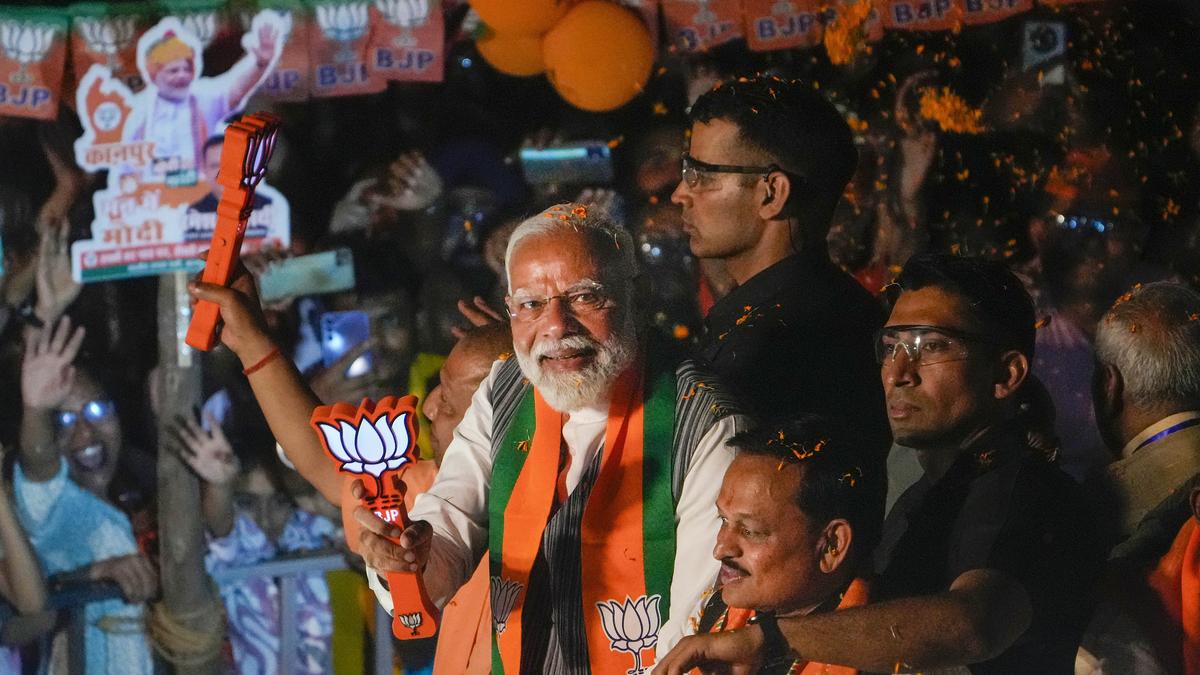
It was the third straight win for Mr. Modi and the BJP when the results of the General election were announced on June 4. However, the BJP lost its parliamentary majority and became dependent on its allies. The BJP-led NDA won 291 seats against the Congress-led INDIA bloc’s 234 seats. Mr. Modi rode on nationalist agendas fuelled by the inauguration of the Ram Temple in Ayodhya, among others.
Shehbaz Sharif on March 3 became the Prime Minister of Pakistan for a second time to lead a coalition government after he comfortably won a majority in the newly-elected Parliament. Mr. Sharif was the consensus candidate of the Pakistan Muslim League-Nawaz and the Pakistan Peoples Party. Mr. Sharif played a key role in keeping together a coalition for 16 months after the Parliament voted former Premier and rival Imran Khan out of office in 2022, and in securing a last gasp International Monetary Fund (IMF) deal in 2023. With the PML-N and PPP coalition winning a comfortable victory, Mr. Sharif was chosen as PM while PPP chief Asif Ali Zardari – widower of ex-PM Benazir Bhutto – was elected President, for the second time.
Former President and Republican Donald Trump made a forceful comeback as he won a second term in office on November 6. He defeated Vice-President and Democratic nominee Kamala Harris, and will take charge on January 20, 2025. Mr. Trump won 292 Electoral College votes and Ms. Harris 224. His new term will likely see a major shift in domestic and foreign policy and transform the functioning of various American institutions. It was a major comeback for a President who refused to accept defeat four years ago, sparked a violent insurrection in the U.S. Capitol, was convicted of felony charges, and survived two assassination attempts.
On July 5, Britain‘s Labour Party came to power with a landslide victory. Labour leader Keir Starmer became Prime Minister, replacing Rishi Sunak and ending 14 years of Conservative rule. Labour won 410 seats in the 650-seat House of Commons while the Conservatives secured 118. Mr. Starmer pledged to start a period of “national renewal”. Mr. Starmer’s recurring defence has been that Brexit, the COVID pandemic, the Russia-Ukraine war and the disastrous policies of the Tory government that had completely destroyed the nation’s economic progress. Mr. Starmer stood for the leadership race with an agenda of 10 key pledges.
In the parliamentary elections held on May 29, Nelson Mandela’s African National Congress lost its majority for the first time since the end of the apartheid, though it managed to form a coalition government. The ANC’s vote share stood at 42.3%, with the pro-business Democratic Alliance at 26.3% and the Marxist Economic Freedom Fighters at 8.1%. Even though the ANC lost the majority, South African President Cyril Ramaphosa was re-elected by lawmakers for a second term on June 14, after his party struck a dramatic late coalition deal with a former political foe just hours before the vote. The deal, referred to as a government of national unity, brings the ANC together with the DA, a white-led party that had been the main opposition and the fiercest critic of the ANC for years.
Reformist candidate Masoud Pezeshkian won Iran’s Presidential election on July 6, after snap polls had to be held following the death of President Ebrahim Raisi in a helicopter crash on May 19. Mr. Pezeshkian promised no radical changes to Iran’s Shia theocracy in his campaign and has long held Supreme Leader Ayatollah Ali Khamenei as the final arbiter of all matters of state in the country. But Mr. Pezeshkian’s win still sees Iran at a delicate moment, with tensions high in West Asia over the Israel-Hamas war, Iran’s advancing nuclear programme, and the rise of Donald Trump would affect the relations between Tehran and Washington.


NTSB investigates a near-collision between Alaska Airlines and FedEx jets at Newark, raising safety concerns in air traffic control.

Vietnam accelerates its shift to ethanol fuel as rising energy prices from the Iran war impact its economy.

Teenagers sue Musk's xAI, alleging its image-generator created explicit images of them as minors, sparking concerns over AI safety.

Shorts News:Watch: Netanyahu: Israel ‘acted alone’ in Iranian gas field attack

Indonesian billionaire Michael Bambang Hartono, co-founder of Djarum Group, has died at 86, leaving a significant legacy.

European nations, Japan, and Canada unite to ensure safe passage through the Strait of Hormuz and stabilize energy markets.

Some of the estimated 20 billion yuan ($2.9 billion) worth of equipment, including screen-printing production lines, will require export approval from Chinese regulators, according to the people. It wasn't immediately clear how much of the equipment would require approval or how long it would take.

Three men, including a Super Micro VP, charged with smuggling U.S. AI technology to China, threatening national security.

Trump compares U.S. strikes on Iran to Pearl Harbor in meeting with Japan's PM, highlighting the element of surprise.

Iran-Israel war: Follow the latest updates from The Hindu on the West Asia conflict on March 20, 2026

The closure of the Strait of Hormuz disrupts a vital artery of the global economy, triggering price increases and turmoil in energy markets; as supply shocks reshape the geopolitics of energy, countries like India, the U.S., and Russia recalibrate strategies amid shifting oil flows and rising dependence

EU lawmakers advance U.S. trade deal legislation, overcoming delays and adding safeguards amid concerns over compliance from the Trump administration.

Pro-Iran Iraqi group pauses U.S. embassy attacks for five days, imposing conditions amid ongoing regional tensions and strikes.