2023 Nobel Prize in physics: Seeing electrons in brief flashes of light | Explained Premium
The Hindu
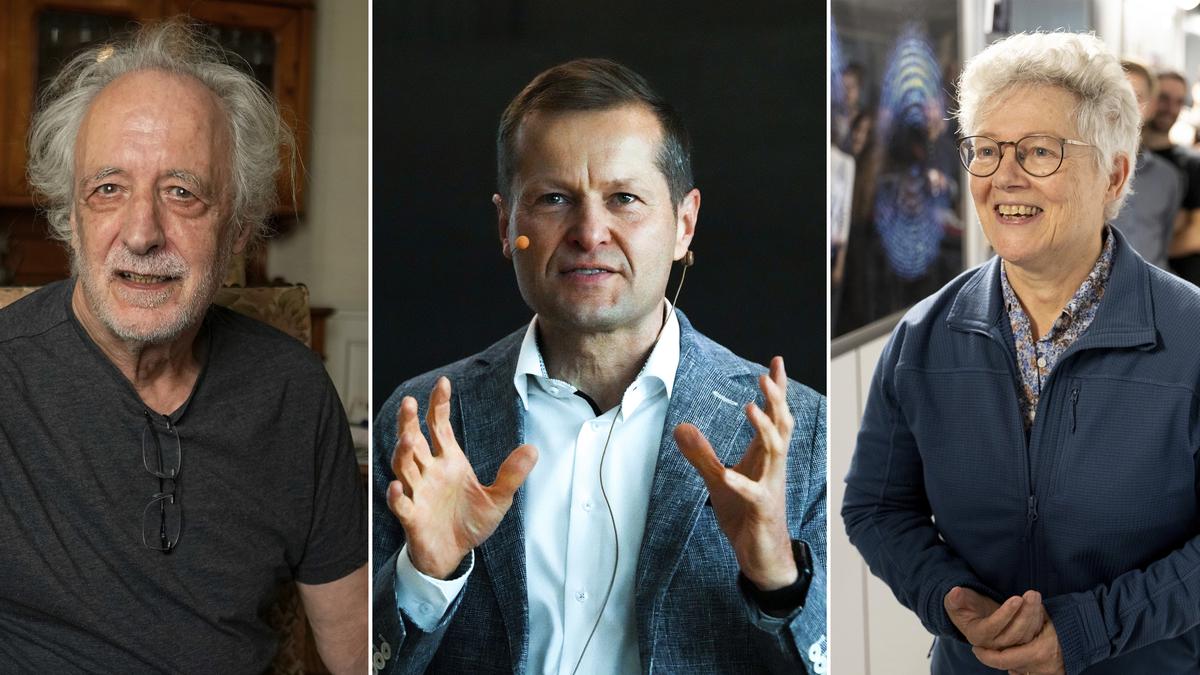
The 2023 Nobel Prize for Physics was shared by three scientists—Pierre Agostini, Ferenc Krausz and Anne L’Huillier—for their “experimental methods that generate attosecond pulses for the study of electron dynamics in matter.”
The 2023 Nobel Prize for Physics was shared by three scientists—Pierre Agostini, Ferenc Krausz and Anne L’Huillier—for their “experimental methods that generate attosecond pulses for the study of electron dynamics in matter.”
The laureates have been awarded the Prize for experiments that have allowed scientists to produce ultra-short pulses of light, with which they can finally ‘see’ directly into the super-fast world of electrons.
“Attosecond physics gives us the opportunity to understand mechanisms that are governed by electrons,” Eva Olsson, chair of the Nobel Committee for Physics, said in a statement.
Also Read | Things to know about the Nobel Prizes
Electrons are the negatively charged particles of an atom. They zoom around the denser nucleus. Before being able to study them directly, scientists understood their properties through averages.
It’s like taking a picture of a race car. The longer the aperture of the camera is open, the blurrier the picture gets. But if the exposure time is small, only a small amount of light reaches the camera’s sensors, yielding a sharper image. The shorter the exposure time, the sharper the image.
Similarly, the rapid movement of electrons would seem to blur together in the eyes of a camera that couldn’t lower its exposure time to the order of attoseconds.


Vibha Batra’s latest book, Spotless (Hachette India) is a novel in verse for young adults

In its first edition, the Madras Art Salon spotlights the works of journalist and artist Narayan Lakshman at The Botanical Club, a social space in the British Deputy High Commission, Chennai

Cholesterol enhances melanoma cell invasion by making nuclei squishier, revealing a potential treatment target in cancer progression.

The designers reinterpret the Swedish artist’s symbolic forms and colour energy through contemporary resortwear silhouettes

Discover the inspiring legacy of Bibha Chowdhuri, a pioneering woman in physics and a trailblazer in STEM history.

Discover the inspiring legacy of Bibha Chowdhuri, a pioneering woman in physics and a trailblazer in STEM history.

Ashdeen’s Spring 2026 collection features saris inspired by the designer’s Parsi gara archive

Red ochre burials, ritual markings and myths across cultures show that red repeatedly marks liminal thresholds such as puberty, sacrifice and death; anthropologists argue that the colour functions as a technology of collective ritual and value, binding communities through shared symbolic acts

India approves 23 institutions for quantum labs under the National Quantum Mission, aiming to advance quantum technology and research.

India approves 23 institutions for quantum labs under the National Quantum Mission, aiming to advance quantum technology and research.

The Gaza conflict exacerbates environmental damage, emitting millions of tonnes of CO2 and threatening climate stability in West Asia.

Chefs and cookery experts share smart kitchen hacks, hybrid cooking methods and appliance tips to help households reduce LPG use without compromising on food

Discover groundbreaking research on Titan's lakes, bat vaccinations, and the unique aroma of ripening bananas in just one minute.