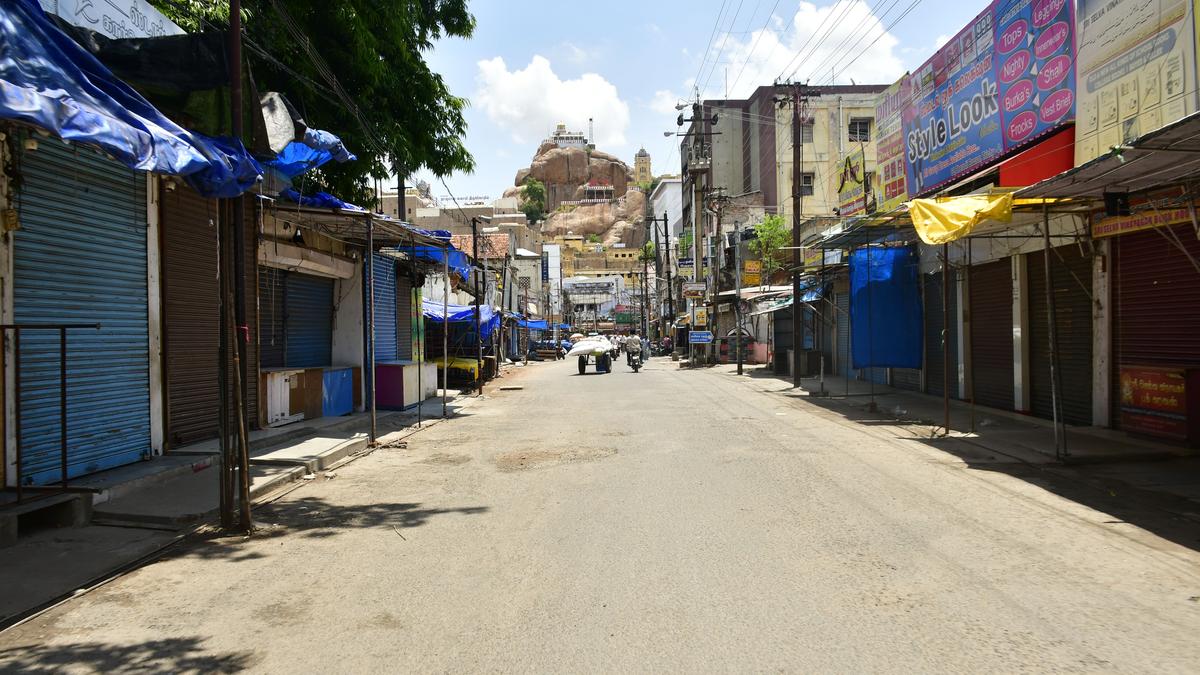
18% GST on commercial properties evokes strong opposition among traders in Tiruchi
The Hindu
Traders in Tiruchi oppose 18% GST on commercial properties, fearing increased financial burden and impact on businesses.
The imposition of 18% Goods and Services Tax (GST) on commercial properties has evoked strong opposition from traders in Tiruchi.
As per the new GST rules, effective from October 10, the tenants will have to pay 18% GST under the reverse charge mechanism (RCM). They are required to pay GST even if the owners of the properties are not registered under GST.
According to traders, the new rule will be effectively applicable to all commercial establishments, irrespective of their sizes. It means that small shops, including tea and coffee shops, snack stalls, betel nut stalls and others, which operate on rental buildings, will have to pay 18% GST.
They foresee that it will create challenges, particularly for tenants under the composition schemes, who cannot claim input tax credit (ITC). They fear that it will automatically result in increase in working capital requirements for the tenants, thereby affecting small manufacturers, traders and service providers, who have taken buildings, offices and sheds on lease or rent.
“It is most probably the worst rule since the GST came into being. It will have a huge impact on the traders and the trades. We could not imagine that even tea and coffee stalls, which run on small structures, are required to pay 18% GST. The rule, if it is not rolled back or rationalised, will have significant political repercussions as well,” said R. Ramesh Kamak, a member of Chamber of Commerce, Tiruchi.
Many traders in Tiruchi were upset over the new GST rule. There had been protests across the State. Various trade bodies had been contemplating to organise protests.
“A trader, who pays ₹10,000 a month towards rent for his tea shop, will have to pay ₹1,800 towards GST. It is huge and it is a big burden for all traders, whether they are small or big,” Mr. Ramesh said.


PM Modi and President Murmu extend Eid-ul-Fitr greetings, promoting unity, harmony, and compassion for a progressive nation.

Security forces in Manipur seized 29 firearms and 50 IEDs during operations amid ongoing ethnic violence.

A data jam on March 28 by OpenCity will have participants studying how the Assembly constituencies in and around Chennai are faring on a set of parameters

Matheesha Pathirana will miss the start of IPL 2026, while Harshit Rana's participation remains uncertain for KKR.

Shashi Tharoor advocates for peace in the West Asia conflict, emphasizing the urgent need for de-escalation and international cooperation.

Assembly polls 2026: Follow updates from The Hindu on the upcoming elections in five States, on March 21, 2026

Maharashtra women's panel chief resigns amid controversy over ties to rape-accused godman, facing political pressure and public backlash.

India's Iran policy could be shaped by the evolving dynamics of the U.S.–Israel war

Will G. Sudhakaran's independent run disrupt the Left's stronghold in Ambalappuzha and reshape Kerala's political landscape?

The Hindu Morning Digest gives a select list of stories to start the day. Read the top news today on March 21, 2026

Manjeswaram gears up for a tightly contested Kerala Assembly election in 2026, featuring key candidates from UDF, NDA, and LDF.

Thirty-three detained Bangladeshi nationals from Tamil Nadu are being deported to Bangladesh via West Bengal with police escort.

Tree felling for a flyover and underpass on the Manikonda-Hitech City stretch sparks outrage as Hyderabad’s road expansion drives another green loss.