14 million tons a day show why China and India won't quit coal
BNN Bloomberg
There’s a reason India and China defended coal’s future at the Glasgow climate summit: no nations have added more coal-fired power-plant capacity in the past decade than these two major emitters.
There’s a reason India and China defended coal’s future at the Glasgow climate summit: no nations have added more coal-fired power-plant capacity in the past decade than these two major emitters.
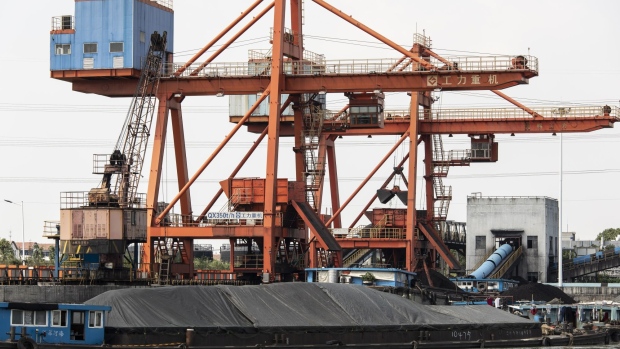
China and India are currently mining a combined 14 million tons a day of the dirtiest fossil fuel. Coal not only remains crucial to their current energy needs but it looks set to have a role for decades to come. That’s even as the two Asian giants install huge volumes of renewables and chase targets to zero out greenhouse gas emissions.
The global pipeline of coal power under development rose last year, the first advance since 2015, driven by a wave of proposed new facilities in China, according to Global Energy Monitor. India’s government forecasts coal plant capacity to grow to 267 gigawatts by 2030 from 208 gigawatts now.
Typically, new coal-fired plants would be expected to operate for at least 30 years, cementing the fuel’s role in the global energy mix beyond the middle of the century.
Negotiators grappled Saturday with last minute changes to the COP26 pact that reduced a call to accelerate the “phase-out” of unabated coal power to a pledge to “phase-down” use of fuel following pushback from India and China. That sparked backlash against the two nations, with COP26 President Alok Sharma saying in a BBC interview that the countries will have to explain themselves.


Gold seen as overbought as Iran tensions ease, with falling oil prices lifting stocks and shifting investor sentiment toward risk assets.

Stock markets in Canada and the U.S. rallied after President Donald Trump said the United States has talked with Iran about a possible end to the war.

A cautious relief swept through financial markets Monday after President Donald Trump said the United States has talked with Iran about a possible end to their war.

A pipeline leak in Sarnia, Ont., has been located more than a week after a sheen reportedly turned up on the St. Clair River.

U.S. President Donald Trump on Monday said the U.S. was talking with a “respected” Iranian leader and claimed the Islamic Republic was eager for a deal to end the war. He also extended a deadline for Iran to reopen the crucial Strait of Hormuz or face attacks on its power plants, saying it has an additional five days.

Berkshire Hathaway, the conglomerate built by Warren Buffett, is buying a 2.49 per cent stake in Japanese insurer Tokio Marine Holdings for about US$1.8 billion as part of a new strategic partnership, deepening its financial commitment to Japan.

Relief is ripping through financial markets after U.S. President Donald Trump said the United States has talked with Iran about a possible end to their war, despite Iran’s denials.

Asset management giant BlackRock’s CEO Larry Fink urged clients to stay invested despite ongoing market volatility, and highlighted that artificial intelligence is reshaping investment strategies and the broader economy.

Jurors wade through daunting evidence in high-stakes Meta trial about social media risks to children
A stream of testimony and evidence has been presented in a New Mexico case exploring what Meta knew about the effects of its platforms on children.

Global oil prices will continue to rise as the war in the Middle East continues and the Strait of Hormuz remains inaccessible, according to an energy expert.

Canada’s federally backed farm lender is offering financial aid to farmers, agricultural businesses and food companies hit by the spike in fertilizer and energy prices, it said on Friday.

Jay Allen is a fan of U.S. President Donald Trump, and voted for him on the belief that the Republican would cut taxes and trim regulations, helping his manufacturing business in northeast Arkansas.