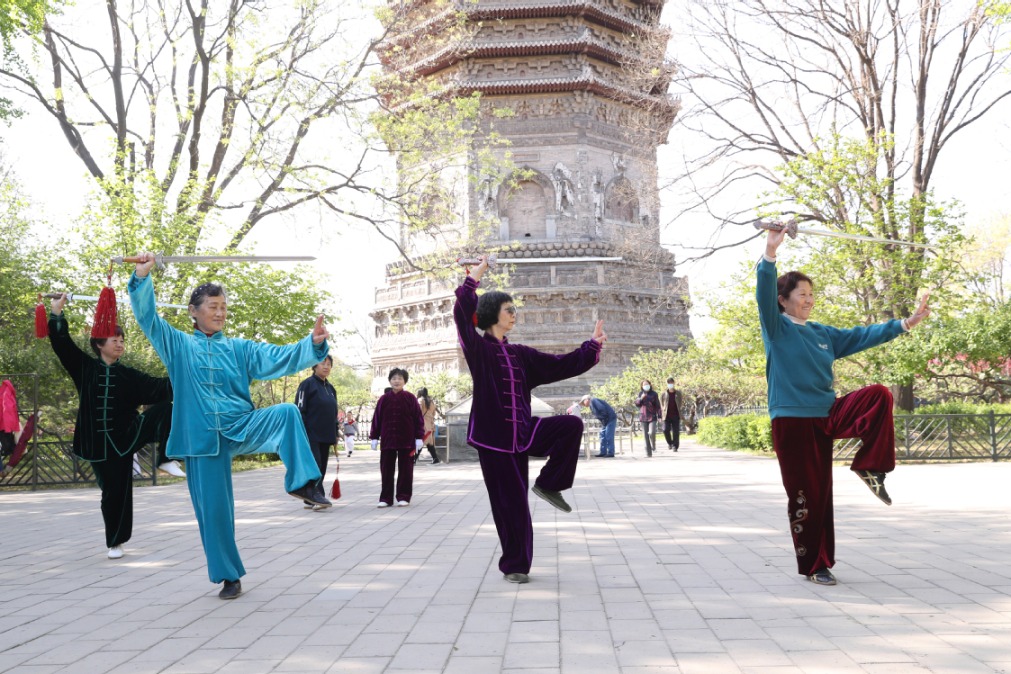
研究:长期练太极拳可抑制帕金森病进展
China Daily
近日一项来自上海交通大学医学院的研究显示,打太极拳可能会在数年内抑制帕金森病的症状和并发症。
帕金森病(Parkinson’s Disease,PD),是一种复杂的神经退行性疾病,也是世界上第二常见的神经退行性疾病,仅次于阿尔茨海默病(AD),影响着约1%-2%的65岁及以上老人。随着全球人口老龄化,帕金森病患病率还将大幅增加。
目前,全世界有超过600万人患有帕金森病,每年还有约60000名新患者确诊。患者大脑中产生多巴胺的神经元丧失,影响运动和认知,导致出现震颤、肌肉僵硬、意识模糊和痴呆等症状。
而近日上海交通大学医学院的一项研究显示,打太极拳可能会在数年内抑制帕金森病的症状和并发症。
Those who practised the martial art twice a week had fewer complications and better quality of life than those who didn't, the researchers say.研究人员称,每周练习两次太极的人比其他人并发症更少,生活质量更高。
Experts say the findings back up previous studies on the benefits of exercise for those with Parkinson's.专家表示,这些发现支持了之前关于运动对帕金森病患者有益的研究。
The study, from Shanghai Jiao Tong University School of Medicine, monitored the health of hundreds of Parkinson's patients for up to five years.上海交通大学医学院的研究团队对数百名帕金森病患者的健康状况进行了长达五年的监测。
One group of 147 people practised regular tai chi while another group of 187 did not.一组147人经常练习太极,另一组187人不练习。
The researchers found that the disease progressed more slowly in the tai chi group on measurements of symptoms, movement and balance.研究团队评估了参与者的总体症状、运动和平衡能力,结果显示,太极组的疾病进展较慢。
This group also saw fewer falls, less back pain and dizziness, with memory and concentration problems also lower than in the other group.太极组的参与者跌倒次数更少,背痛和头晕次数更少,记忆力和注意力问题也低于另一组。
At the same time, sleep and quality of life continuously improved.与此同时,睡眠和生活质量不断提高。
A previous trial of people with Parkinson's who practised tai chi for six months found greater improvements in walking, posture and balance than those not on the programme.之前一项针对帕金森病患者的实验发现,与未参与实验的患者相比,坚持打太极半年的参与者在走路、姿势和平衡方面有了更大的改善。
