Mysterious drones keep buzzing key sites in Europe. So what's the defence strategy?
CBC
Even before at least three drones were reportedly spotted over a power plant in northern Belgium on Sunday evening, Brussels was on high alert.
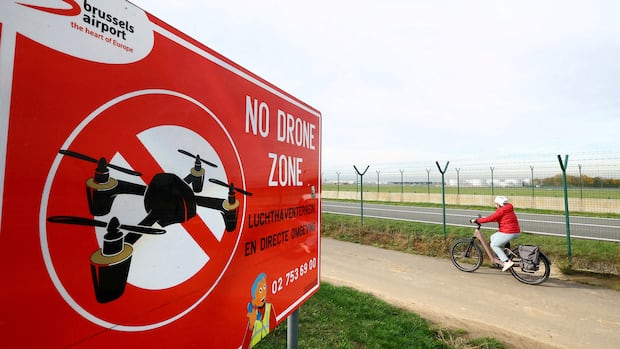
A rash of drone sightings has led to repeated airport closures in the country, stranding thousands of passengers and grounding planes.
Belgium is the latest target in a string of mysterious drone incidents across Europe over airports and military sites — and some officials have directly pointed the finger at Russia. It has left authorities scrambling to boost defences.
Belgian media are reporting that the drones this weekend were seen over Doel nuclear power plant near the Port of Antwerp. CBC News has not yet been able to confirm these reports.
Unlike the multiple Russian drones that violated Polish airspace in September at the same time as a widespread air attack on Ukraine, there is very little known about the most recent sightings.
There is no indication that any of the drones involved in the recent sightings have been intercepted or have crashed.
“There is a sort of element of whack-a-mole or hide and seek here,” said Jacob Funk Kirkegaard, a senior fellow at the Peterson Institute and the Brussels-based think-tank Bruegel.
“These drones, whoever launches them or wherever they are launched [from], they don’t linger, right? They enter ... blocked airspaces and then they’re gone again.”
On Sunday, the head of Britain’s military said it was going to be sending experts and equipment to Belgium to help detect and defend against the drones.
The head of Britain's armed forces, Richard Knighton, told the BBC that Belgium had asked for assistance, after the airport in Brussels was closed last Tuesday evening for hours as a result of drone sightings.
Belgium’s Liège Airport, which is primarily used for cargo traffic, had flights suspended multiple times last week — including on Sunday — after reports of drones.
In Germany, where drones grounded 17 flights at the Munich airport in October, authorities are assembling rapid-response teams to counter the threat, which the country’s defence minister has pinned on Russia.
In response to a question from a journalist on Friday, Boris Pistorius said he thought Belgium was being targeted because of the ongoing debate about using 140 billion euros ($226 billion Cdn) in Russia’s frozen assets to aid Ukraine. That money is being stored in a Belgian-based clearinghouse called Euroclear.
